

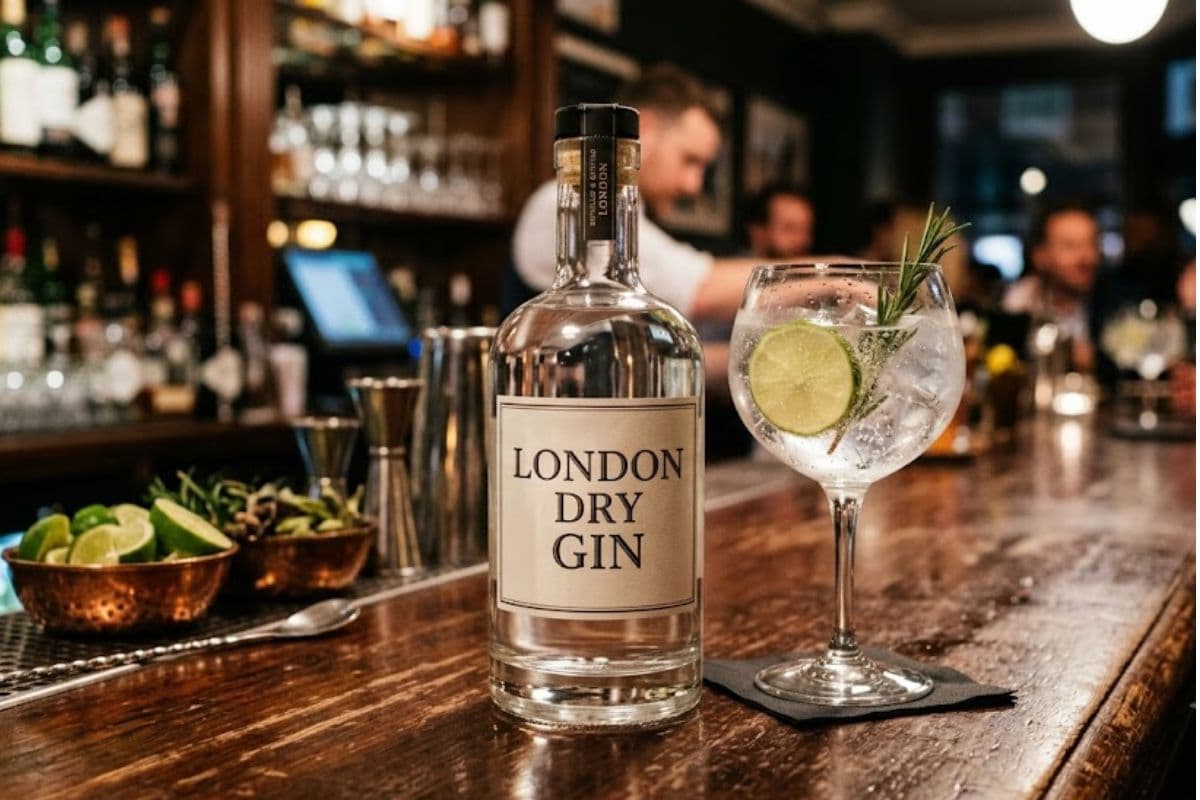
Walk into any cocktail bar, take a glance at its back rail, and you will surely spot a bottle of London Dry Gin. It is the undeniable standard of classic cocktail culture and is the pine-forward, crisp backbone of legendary drinks like the Negroni, the Martini, and the Gin & Tonic. Even though it has the name of the capital city stamped on its label, London Dry Gin is not tied to any geographical boundary. So what exactly is “London Dry Gin”, and where does the name come from? Let's understand.
In the early 1700s, the gin in London was dangerous and cheap, as it was made out of poor grains and tasted harsh, like turpentine. To hide its bad taste, the illegal distillers began adding a lot of sulfuric acid, sugar, and sweeteners. This covered-up, sweet style was known as Old Tom Gin.
In the 1830s, with the Coffey column still, everything changed; with this, distillers could make pure and clean alcohol at scale. So now, the distillers in London no longer needed any sugar or sweeteners to hide their flaws.
Instead, they redistilled clean spirit with coriander, citrus peel, juniper, and angelica. The result of this was an aromatic, clean, and dry gin. It became famous as London Dry Gin as these unsweetened gins were pioneered and popularized by London’s premier distilleries.
.jpg&w=1920&q=75)
Also Read: What Makes Indian Craft Gin Different From London Dry Gin?
London Dry Gin is known for its structural clarity. While modern craft gins often offer fruit, floral, or exotic botanicals at the forefront, London Dry Gin actually stays rooted in classical architecture.
Juniper Berries: These are the undisputed hero and deliver the flavors of resin, pine, and slight bitterness.
Angelica & Orris Root: These are earthy ingredients that offer lighter volatile oils to the clear spirit. This gives a gin a lingering and dry finish.
Coriander Seed: This is the second most important ingredient after Juniper berries. It is known to bring cracked pepper, herbal notes, and bright citrus.
Citrus Peel: Sweet orange peels, dried lemon peels, or bitter Seville orange peels are added for vibrancy.
No, London Dry is a technical classification under the European Union law and laws recognized across international spirit frameworks. It says that one can make London Dry anywhere in the world, but only if your distillation technique adheres to their legal criteria as follows:
Also Read: Gordon's London Dry Gin Review: History, Tasting Notes, Price & Buying Guide
.jpg&w=1920&q=75)
The biggest reason behind London Dry Gin being the ultimate cocktail gin is that it is strictly dry and aromatic, with any umpleasantly excessive sweetness. Hence, it happens to be the perfect canvas for mixologists to show their creativity. The sharp botanical structure of this gin cuts clearly through the other ingredients and does not get lost. Let's understand why these cocktails specifically use London Dry.
The Gin & Tonic: The tonic’s quinine has natural bitterness, which is ideally complemented by the bright juniper and citrus oils of the spirit.
Gimlet: The herbaceous core of the spirit complements and balances the zesty punch of lime juice very neatly.
The Dry Martini: The sharp pine-and-citrus backbone of a London Dry Gin complements the olive or lemon twist with dry vermouth.
Negroni: The robust profile of London Dry stands up effortlessly against the bitterness of Campari as well as the richness of sweet vermouth.
I would like to suggest simple tips for using London Dry Gin. Make sure you store it in the freezer for smoother Martinis and always use large ice cubes while serving, as they melt slower. Another tip I would suggest is to always pour 1 part of gin to 2 parts of premium tonic for the perfect gin & tonic combo!
London Dry Gin is the most unadulterated and transparent style of gin. While making this gin, the distillers have nowhere to hide flaws. So basically what comes out of the still is exactly what is served in the glass. Since this gin was pioneered and popularized by London’s premier distilleries, they are known as London Dry Gin.