
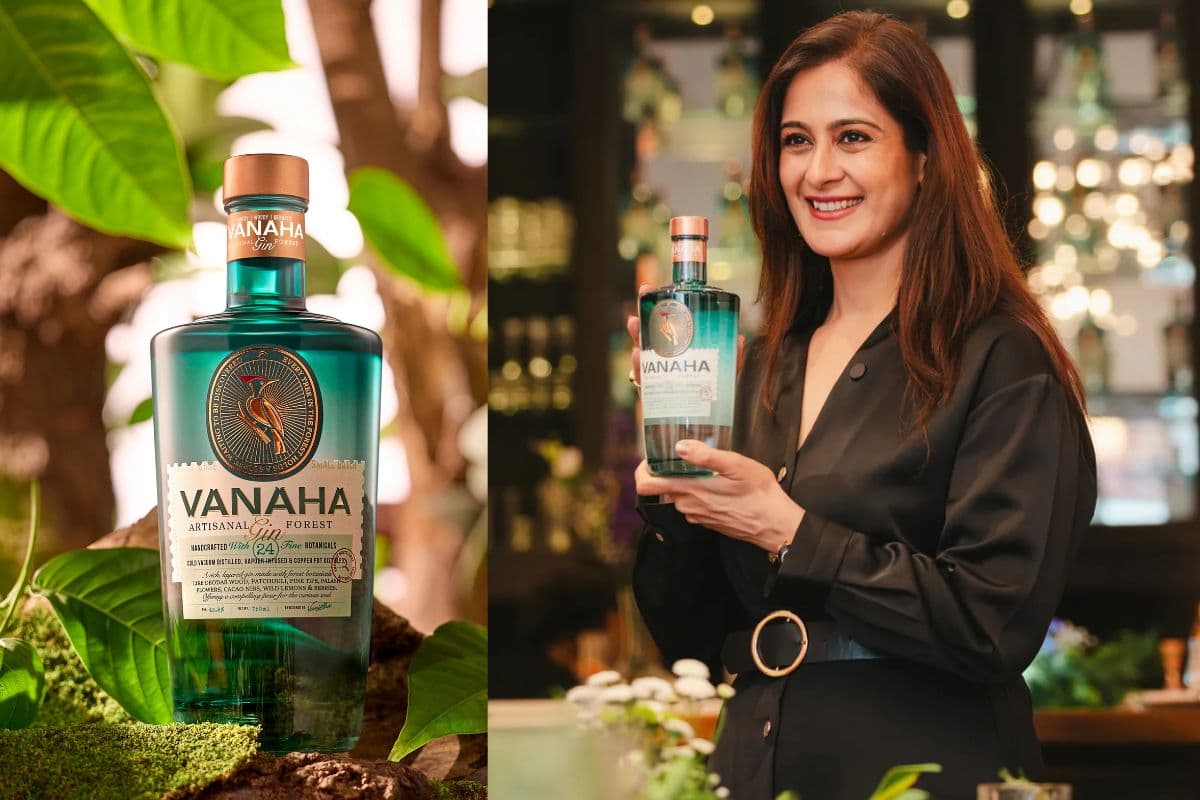
It is beautiful to see a woman break glass ceilings, especially in a male-dominated industry. It is a testament to the fact that when a woman when she is focused, relentless, and passionate about something, she can achieve everything. Looking at Vaniitha Jaiin, owner of Revelry Distillery and creator of Vanaha Gin, evokes the same feeling. She is known as the first woman to independently build, own, and lead an alcoholic beverage distillery in India. But behind all the appreciation and awards, there’s a story. We at unsobered got the very opportunity to meet and chat with Vaniitha Jaiin, and here’s how it went.
Vaniitha Jaiin is a prominent Indian entrepreneur and international spirits judge. She is known as the first woman in India to independently establish and run an alcohol distillery. As a founder and creator of a spirit, she transitioned from a highly successful corporate marketing career to pioneering groundbreaking innovations in the Indian craft spirits industry.
She built a 20-year career in brand management, corporate communications, and marketing across top companies like Flipkart, Ogilvy & Mather, and Mahindra Satyam. Jain left her corporate career and solo-travelled to study Wine Science and earned advanced credentials from the WSET London.
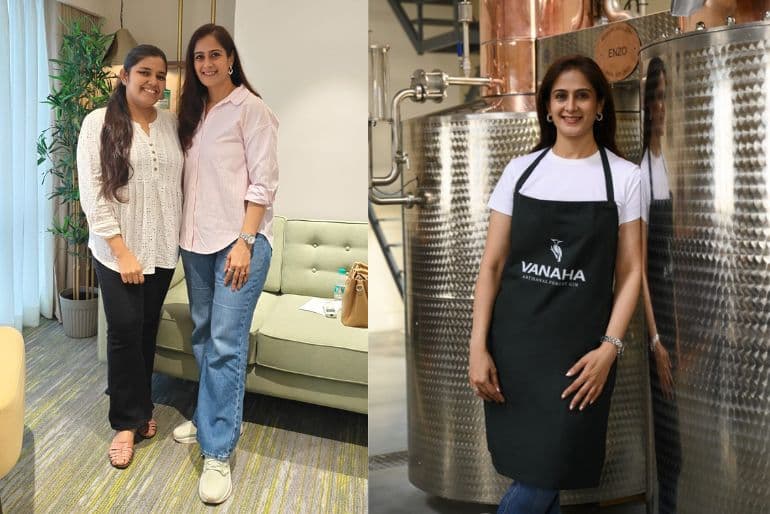
unsobered: What was the exact moment or memory that sparked your fascination with the alcobev world?
Vaniitha Jaiin: In December 2010, during an advanced luxury brand management course in Paris, I realized how very few people in this world actually study wine and spirits. That is the moment that sparked my fascination with the art and science of spirits, which eventually led me to own a distillery today.
unsobered: Building a craft brand is hard, but setting up a distillery from scratch is a massive leap. What made you choose distilling over simply contract-bottling?
Vaniitha Jaiin: I have my name written on the bottle of Vanaha Gin; it means I have to build everything from scratch. I couldn't hand over the quality, vision, and craft to contract manufacturers because that would mean zero control. After years of studying the art and science, I did not want to take any shortcuts.
Building my own distillery was surely a tougher and riskier choice, but it was the only way to completely own the process and create an authentic and world-class spirit from India.
unsobered: Being the first woman in India to independently build and run a distillery is a massive title. How challenging has this journey been so far?
Vaniitha Jaiin: To be honest, it has been incredibly challenging, and the alcohol industry is surely one of the toughest. I come from a conservative North-Indian family, and as a new mom, nobody took me seriously.
Also Read: Mumbai’s Luv Restaurant Launches First Cocktail Menu; In Conversation With Chef Akash Deshpande
I left my secure corporate career at Flipkart and ESOPS to study wine and spirits globally. I used to travel alone to distilleries and vineyards in the remotest corners of the world with an aim to learn. After years of studying and then finally launching my own consulting firm, I still had to prove my expertise to earn respect and a seat at the table.
Even while setting up my distillery in Goa in 2023, people could not believe that a woman was doing it all alone. But my obsession with the craft, quality, and building India’s finest spirit kept me going.
unsobered: The Indian spirits landscape has historically been a boys' club at the top level. Did you face any gender-biased behaviour?
Vaniitha Jaiin: Yes, the bias is clearly there! But it is never direct; instead, it shows up in subtle ways like men avoiding eye contact or receiving messages that read, “You are a woman, why are you talking about alcohol?” I even received a LinkedIn DM at 1 AM from a senior corporate executive asking me to stop talking about alcohol just because I am a woman.
But at the end of the day, I know I have earned my seat in rooms where no one offered it to me through my expertise. And that is what matters the most.
unsobered: Beyond the challenges, have there been unexpected advantages to being a female founder in this space?
Vaniitha Jaiin: I guess the biggest advantage has been sensory perception. I believe most women are naturally sharper at tasting and decoding the spirits, and I have also spent 7000 plus hours in training that skill.
unsobered: Your debut release, Vanaha Gin, uses an ambitious 5-step distillation process. Why was this combination essential for you?
Vaniitha Jaiin: Our only aim was to bottle a forest, and that is what led to the five-step distillation process. I spent many hours, days, and even months testing things because a copper pot alone wasn't enough. 24 botanicals cannot be treated the same way; each one of them needed different care.
So we created maceration first, to open up the botanicals. Then copper pot distillation for deep, sturdy, and woody notes. Then came vapor infusion for soft herbs and delicate flowers to get their flavors without any bitterness. The cold vacuum distillation was the breakthrough for all the bright top notes. It extracts at 40 to 45 degrees Celsius in a vacuum, just like perfumery.
Only this combination could have brought in what we needed. Layering (top, mid, and base) the forest in a bottle.
.jpg&w=1920&q=75)
unsobered: Vanaha incorporates 24 handpicked botanicals, including rare Indian ingredients. How did you balance regional provenance with maintaining a globally competitive palate?
Vaniitha Jaiin: The core of Vanaha Gin was Indian forests, and so I sourced 24 botanicals from there itself. We trialed over 200 to 250 botanicals, and each was distilled for 15 hours. Then only those botanicals that added the best flavors earned their place and made it into Vanaha.
I used rare Indian forest ingredients like deodar wood, pine tips, palash flowers, and more, but the goal wasn’t just Indian; the gin had to travel globally. We tested with juries in the US, UK, Europe, and Asia, and it started winning double golds and master medals. This proved that it is working!
So I would say that the regional provenance gave this gin its soul and the craft made it globally competitive.
unsobered: Goa has become the undisputed "craft capital" of India's spirits revolution. Do you see other Indian states catching up, or will Goa remain the hub for innovation?
Vaniitha Jaiin: Goa, by far, is surely the undisputed “craft capital”, all thanks to the government there, which has been so supportive. But I wish more and more states lend that kind of support and appreciation to this industry.
unsobered: Indian consumers are rapidly shifting from "drinking to get drunk" to "drinking for the experience." What is driving this shift toward premiumization and mindful drinking?
Vaniitha Jaiin: So, Gen Z is not drinking less; they are drinking more mindfully. They check labels, find out who has made it, and how it has been made because they care about what goes into their body. Their focus has shifted from “getting drunk” to “drinking for the experience.” They all want to feel good the next day, and that is what is driving them to premiumization.
Also Read: Alta Stella By Sanjay Dutt Serves Zodiac Cocktails And Celestial Vibes; See Review
unsobered: What is the biggest mistake consumers make when ordering or mixing a craft gin at a bar?
Vaniitha Jaiin: The biggest mistake is using too little gin and letting it drown in tonic. For a craft gin, make sure you ask for a 45 ml to 60 ml pour and equal parts of tonic. This will help the botanical flavors of the gin shine.
Also, people should stop defaulting to lemon wedges for garnishing. Instead, start using garnishes that would enhance the gin and not overpower it, like soft herbs or orange peels.
unsobered: Ice, water, or tonic- what actually opens up the aromatic "forest-in-a-bottle" flavor architecture of Vanaha best, and why?
Vaniitha Jaiin: Vanaha is created in such a way that it stands tall on its own, just like the trees in the forests. But to answer your question, you can have it with tonic.
unsobered: Does glassware shape really matter for a gin cocktail, or is it just aesthetic hype? Which glass brings out the best in an earthy, botanical spirit?
Vaniitha Jaiin: Yes, I believe that the glassware really helps, and it is not just there for the hype. Like for a craft gin, a copa glass or a stem glass really works as it lets the aromas and garnishes shine. While a highball keeps it relaxed. The right shape of the glass can actually make the drink feel and taste better.
unsobered: Food pairing with wine is famous, but gin pairing is booming. What Indian dishes or bar bites pair mind-blowingly well with a forest-forward gin?
Vaniitha Jaiin: Gin is one of the most versatile spirits in the world that can be easily paired with any cuisine. Talking about Indian food, it can be easily paired with rich Punjabi curries or butter-heavy curries or even South Indian dishes. The botanicals easily cut through the richness of the spices and cleanse your palate so that you can enjoy every single bite.
unsobered: Today's consumers are scrutinizing bottle labels the same way they read food ingredients. What information should drinkers start demanding on alcohol labels that most brands currently hide?
Vaniitha Jaiin: I would actually urge all consumers to turn the bottle and read the label to know what exactly you are drinking. They must demand full transparency on colors, additives, and flavors. Because most “mango” and “jamun” gins get their dark colors from synthetic dyes and not distillation. Hence, the labels should state if the flavors or colors are natural and if they will fade or not.
unsobered: What is the most exciting Indian ingredient or botanical you think is going to take the global spirits world by storm next?
Vaniitha Jaiin: Oh my god, there are so many of them. Okay, let's take pine tips, deodar wood, and kaffir lime are set to take the spirit world by storm. This is because they are rare, hard to distil, and bring the most amazing notes straight from the forests.
unsobered: For women listening to this who want to build something bold in male-dominated industries, what mindset shift is absolutely non-negotiable?
Vaniitha Jaiin: The non-negotiable mindset shift is to get completely clear on your "why" and keep reminding yourself every single day. If your why is strong, the universe will meet you halfway. Don’t build it for anyone else; build it for yourself. And equally important is to choose your environment and partner wisely. You need people around you who understand your why and support you, not pull you down.