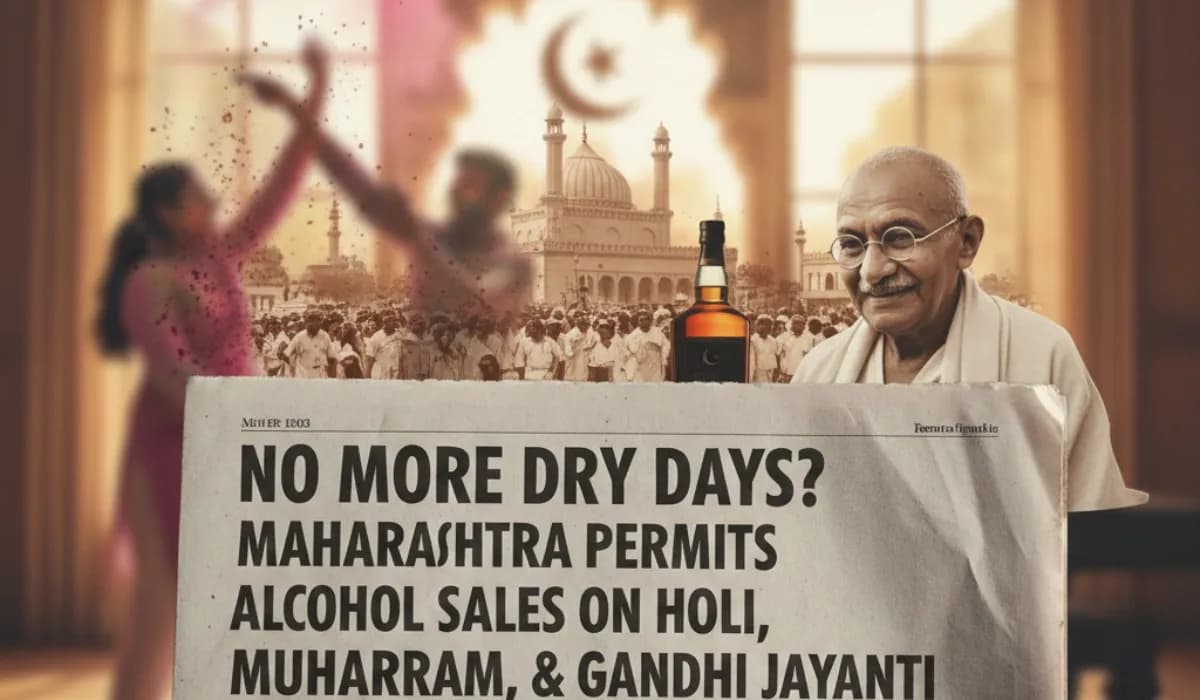
In a surprising update to the state’s long-standing liquor regulations, the Maharashtra government has announced that several traditionally "dry" holidays will now permit alcohol sales. This move aims to modernize the state's approach to its excise calendar by prioritizing legal, regulated transactions over the prohibited gaps that often fuel illicit markets.
This article details the specific dates affected in 2026 and the reasoning behind this shift.
The Maharashtra Government has officially revised its excise guidelines to permit the sale of alcohol on three dates previously designated as mandatory dry days: Holi, Muharram, and Gandhi Jayanti. This policy update represents a significant pivot in how the state balances social regulation with economic and administrative realities.
Under the new directives, licensed liquor outlets – including wine shops, bars, and permit rooms – are now authorized to operate during their standard business hours on these specific occasions.
.jpg&w=1920&q=75)
The State Excise Department has cited several administrative and economic reasons for this shift:
The decision has sparked a polarized debate across Maharashtra:
While the list has been shortened, the concept of dry days has not been entirely abolished. Maharashtra still maintains several mandatory dry days throughout the year to ensure public order during major national events and specific religious observances:
Occasion | Typical Status |
Republic Day (January 26) | Mandatory Dry Day |
Independence Day (August 15) | Mandatory Dry Day |
Election Days | 48 hours prior to the end of polling (District specific) |
Anant Chaturdashi | Often restricted in specific urban centers |
The decision to permit alcohol sales on Holi, Muharram, and Gandhi Jayanti marks one of the most substantial changes to Maharashtra’s excise landscape in recent history. By prioritizing the elimination of illicit markets and the stabilization of state revenue, the government is moving toward a more liberalized commercial environment.
However, as the policy goes into effect, the focus now shifts to local law enforcement. Police and excise officials will remain on high alert during these newly "wet" holidays to ensure that the increased availability of alcohol does not lead to public safety issues. For residents and business owners, this change offers more freedom, but it comes with the continued responsibility of adhering to local law and order protocols.

.webp&w=3840&q=100)