
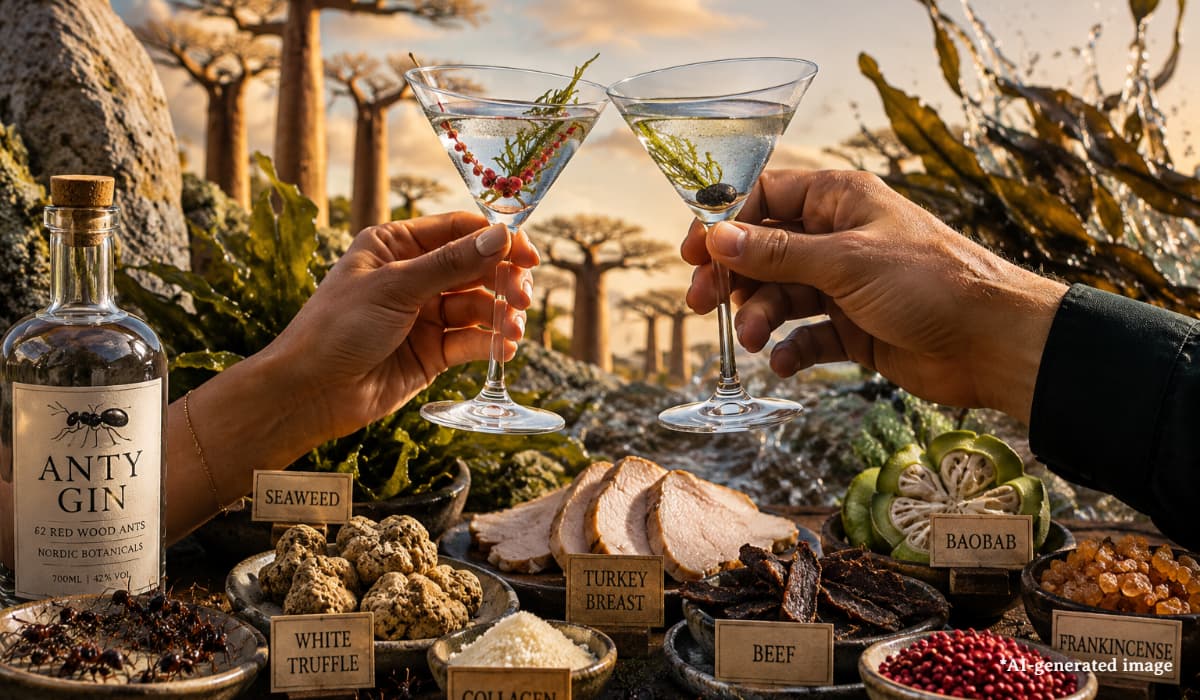
Gin has come a long way from the familiar combination of juniper, coriander, and a few citruses to a spirit that is seeing more experimentation than ever before. Distillers have started looking beyond the traditional botanical cupboard, experimenting with ingredients that can make a gin taste smoky, savory, earthy, even downright meaty. Yes, you read that right.
In this listicle, we’re sharing with you some of the weird botanicals used in gin around the world. From ants and baobab to beef and even turkey breast (yes, its true), we’re sharing with you ‘ingredients’ that have made their way into a gin bottle. Keep reading to know more!
If you thought the name Anty Gin was just a clever pun, think again. The world’s first insect-based gin, it was created by Cambridge Distillery in collaboration with Nordic Food Lab.
The gin uses red wood ants – but they are not simply thrown into a bottle of gin. They are distilled separately and blended, resulting in a finished spirit that contains the essence of 62 wood ants, along with wood avens, nettle, and other botanicals.
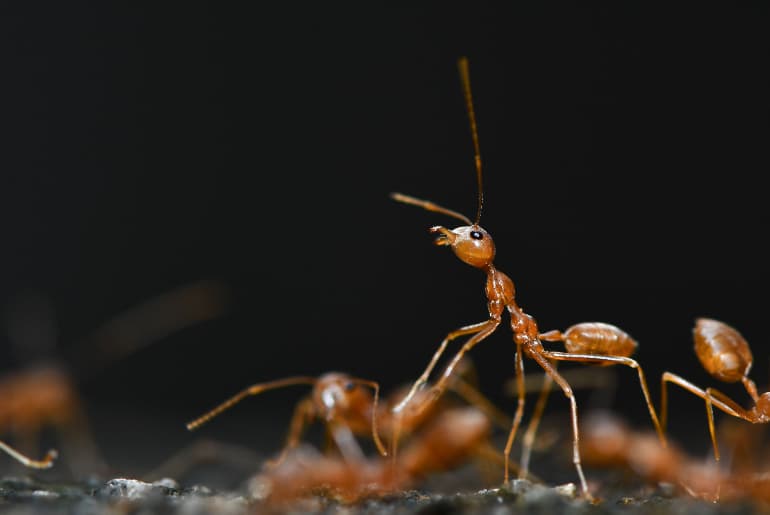
Anty Gin contains 42% ABV and is surprisingly citrusy. The formic acid from the ants also contributes a tangy, sharp character and a slightly tingling quality. It retails for about £220 for a 700ml bottle, roughly equivalent to INR 28,302!
Collagen is one of the most common ingredients in skincare and beauty products, but what if we tell you that there’s a gin too that contains collagen?
Created by Young in Spirit, CollaGin, the world’s first gin distilled with pure collagen, includes botanicals like rose oil, pink grapefruit and orris root. The brand positioned it at the intersection of beauty and booze.
It contains about 40% ABV and is not suitable for vegetarians due to the collagen derived from animal fat. Today, Collagin typically retails between £31.00 and £35.00 ($40 to $45 USD) for a 50cl bottle in the UK and Europe.
Adding truffle to pastas and pizzas is a sign of luxury, isn’t it? But when you add truffle into a gin, how will it taste?
Cambridge Distillery took it upon itself to find out the answer and created the Truffle Gin. The gin uses white truffle from Alba in Italy's Piedmont region, an ingredient prized for its intensely earthy, musky and aromatic character. Cambridge Distillery describes the finished spirit as having rich, earthy notes alongside juniper and flavors reminiscent of fresh pine.
The distillery uses precision distillation to capture the essence of truffle. With a typical ABV of 42%, it retails for £90 internationally.
4. Turkey Breast – Pechuga Gin
In our list of the 10 weird botanicals used in gin, this one might be the most bizarre so far, isn’t it? Portobello Road Gin created what it described as the world's first pechuga gin, borrowing an unusual technique from Mexican mezcal-making.
In traditional pechuga-style distillation, meat or other ingredients are suspended inside the still while the spirit is redistilled. And Portobello Road decided to use Turkey breast as their choice of meat. The result? A gin that has the essence of turkey along with 13 other botanicals including apples, pears, plums, dried fruits, and brown rice.
It sounds like something designed to shock people at a tasting, but the concept is actually rooted in an established distillation tradition. While it is now sold out as per its official website, it retailed for about £35.
Seaweed may not sound quite as shocking as ants or beef, but it represents one of the most fascinating ingredients in modern gin-making.
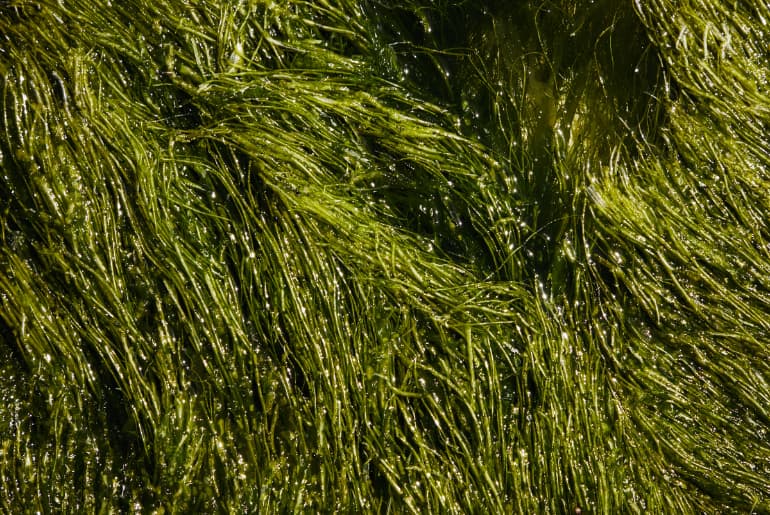
Distillers in many coastal regions have experimented to introduce seaweed and kelp into a gin, particularly for a saline, mineral and umami characteristic. One notable example comes from Canada’s The Newfoundland Distillery, where seaweed has been used alongside other coastal botanicals. This Canadian gin uses dulse, an edible red seaweed harvested from the Grand Banks.
This gin contains 40% ABV and retails for about $39.99 Canadian Dollars.
If turkey gin wasn't strange enough, there is also a gin involving dried beef. Butcher's Gin was developed by Belgian luxury butcher and wholesaler Luc De Laet after he noticed similarities between the spice blends used for marinating beef and the botanical combinations used in gin.
He then incorporated dried beef into its recipe, creating one of the most bizarre gin experiments in the world. While it is yet to achieve wide distribution, it is definitely worthy of a spot on our listicle of the 10 weird botanicals used in gin.
Baobab might not sound strange if you've encountered African ingredients before, but it is certainly an unconventional gin botanical. The fruit comes from the iconic baobab tree and has a naturally tart, slightly citrusy character.

Elephant Gin, produced in Germany with a strong African inspiration, includes baobab alongside African botanicals such as lion's tail and devil's claw. While these ingredients sound downright bizarre, the brand’s broader mission is rooted in supporting elephant conservation. With a 45% ABV, it retails for £27 to £39 in the UK. Definitely an enjoyable gin for making gin cocktails with a distinct flavor.
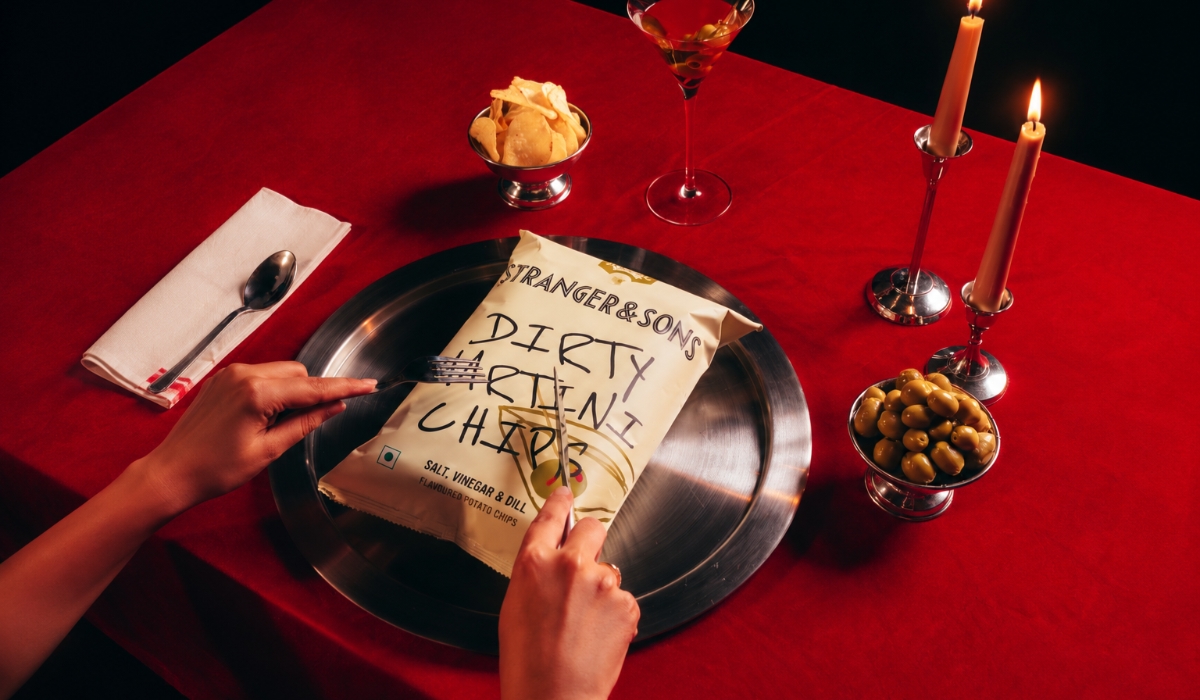
And if you're making a Martini with your gin, pair it with the ultimate Dirty Martini chips!
Pink peppercorns might look familiar, but there is a botanical plot twist: they aren't true peppercorns. They’re actually dried berries from the Schinus species and aren’t even related t black peppercorns. These are softer, fruity, and mildly peppery.
Bolivia's La República Andina Gin, for example, uses pink peppercorns, also known locally as molle berries. It contains about 42% ABV and retails for about $30 to $42 USD.
Frankincense is best known for its association with incense and ancient rituals. Today, it has found its way into gin. Unlike conventional gin botanicals such as coriander seeds or citrus peel, frankincense is a resin obtained from Boswellia trees. Its intensely aromatic, resinous and perfumed character can lend a gin an unusual depth and a subtle incense-like quality. It can be combined with spices and citrus to create a gin that feels warmer and more aromatic than a conventional London Dry. The Edinburg Christmas Gin, released in 2019, contained delicate essence of Frankincense and retailed for about $59.99 USD.
Are you sure you're serving Margaritas and Martinis in the right glass? Here's what we think about the right glassware for cocktails!
Saltwort is an another example of a botanical that can make a gin taste like its landscape, similar to seaweed. The plant grows in salt marshes and has a naturally saline, green character.
Danish gin-makers have long experimented with saltwort alongside seaweed, creating spirits that lean into the flavors of the coast. The result is a fascinating contrast to floral or citrus-led gins: instead of smelling like a garden or citrus grove, these spirits can evoke salty air, coastal vegetation and the sea.
Looking to experiment with these gins but want to make something beyond a G&T? Refer to our article on the best gin cocktails for those who don't like a G&T!
Which one of these weird botanicals used in gin fascinated you the most? From seaweed and frankincense to beef and ants, these ingredients prove that gin can be made using the most absurd ingredients out there. And perhaps that is why unusual botanicals have become such a compelling part of the gin-making industry. Which one of these unusual gins are you excited to try?