
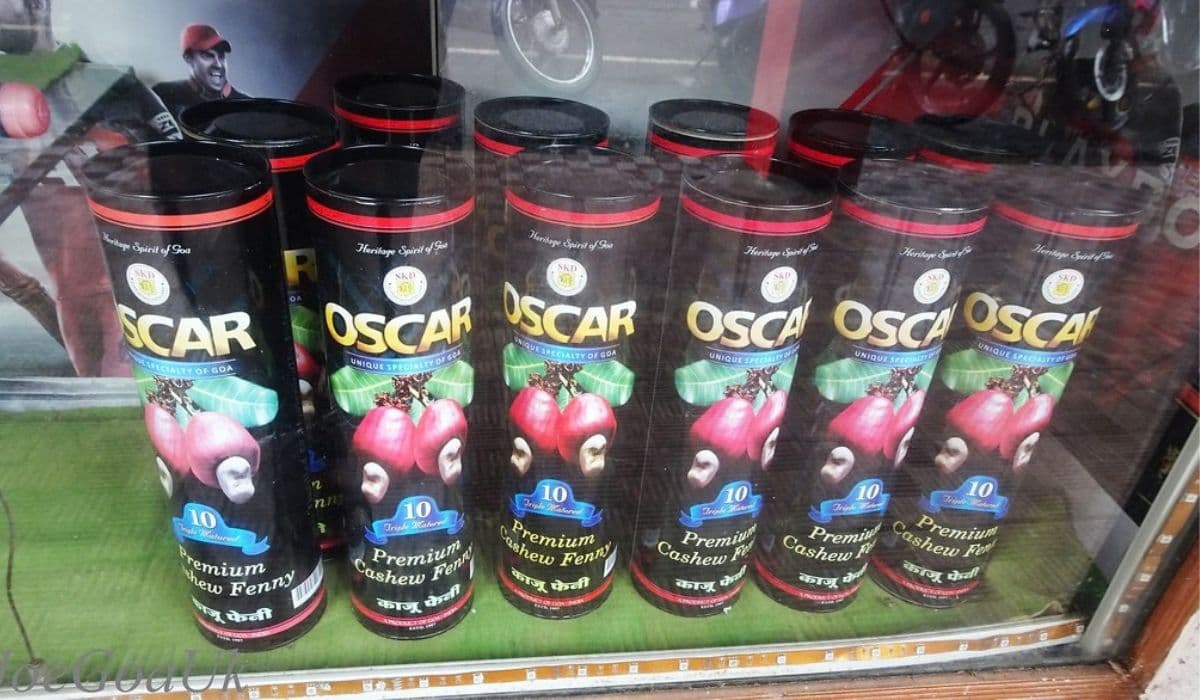
As soon as you pour a glass of authentic Goan Cashew Feni, its aroma immediately fills the room. The scent is unmistakably tropical, pungent, slightly earthy, and intensely fruity. It is a far cry from the scent of spirits like whiskies, rum, or tequilas. This is because Feni is distilled directly from the delicate, highly perishable cashew apple for Kaju Feni, and coconut palm sap for Coconut Feni. Other spirits like the ones mentioned previously are distilled either from grains, sugarcane molasses, or Agave. In this unsobered guide, we take a metaphorical journey to Goa and find out why and how Feni's raw materials, wild open-air fermentation, traditional copper pot distillation, and rich ester chemistry give it a singular taste profile unmatched anywhere in the world.
One of the major reasons for this unique taste and smell of the alcohol is its base. Unlike most spirits that rely on starches or dense sugars that can be stored and shipped, Cashew Feni relies on fresh, highly perishable cashew apples or false fruits.
.jpg&w=1920&q=75)
These fruits are harvested exclusively between February and May, and are intensely aromatic, astringent, and rich in natural fruit sugars, tannins, and Vitamin C. The astringency, native tannins, and volatile organic compounds of the fruit then transfer from the fruit juice (neero) to the spirit.
These chemical compounds are primarily what impart an exotic tropical warmth to the spirit. The final flavor profile blends notes of overripe pineapple, roasted cashew fruit, green pepper, and wild honey.
Also Read: What Is Feni? History, Types, Alcohol Percentage, Price & How To Drink It
With many industrial distillation processes, the spirits are heavily reliant on lab-isolated yeast strains for uniform, neutral flavor. However, this is not the case with traditional feni. This spirit relies on wild airborne yeasts and native microflora present in Goan orchards for the fermentation process.
The juice is stored in earthen or stone pits called colmbi, and the fermentation process is spontaneous yet slow. This slow and natural fermentation process creates complex secondary metabolites. These include higher alcohols, organic acids, and volatile congeners, which give Feni its signature "funky" or "savory" undertones.
The process is actually quite similar to how high-ester Jamaican rum or artisanal Mexican mezcal get their distinctive flavor profile and funk.
.jpg&w=1920&q=75)
The initial spirit goes through a double distillation process. The following are the steps that it goes through:
First Step: The Making of Urrak or the First Cut
The fermented juice is distilled once, for the first time, to yield Urrak. At this stage, urrak has an ABV of around 15 percent. Urrak is a seasonal, light, cloudy, and highly refreshing spirit. It is often paired with Limca, green chillies, and lemon.
Second Step: Cazulo and Feni or the Second Cut
The urrak is then re-distilled with fresh fermented juice in traditional copper stills that are known as bhatti. These traditional copper cauldrons strip out harsh sulfurous off-notes while leaving oily, aromatic esters intact, which is where its funk comes from. This second distillation concentrates the spirit to around 40 percent to 45 percent ABV. At this stage, it is able to capture heavy, flavor-packed congeners while preserving the raw fruit identity.
Third Step: Glass Resting or Garrafão
Finally, the double-distilled spirit is matured in glass carboys, also known as garrafões. They are large glass bottles with a round, wide body but a narrow neck that is stopped with a cork stopper. Historically, this has been the process of making Feni, and not much has changed today. This resting phase allows the volatile esters of the fruit to integrate smoothly with the spirit without losing the vivid, unadulterated essence of the fresh cashew fruit.
Also Read: Urrak vs Feni: Goa’s Cashew Spirits Explained – Taste, Tradition, and Where to Sip
The strenuous and unique distillation process of feni, along with the unique base ingredient, gives rise to the distinctive scent. Furthermore, the characteristic taste is because it is the product of fresh seasonal cashew fruit, spontaneous wild yeast fermentation, small-batch copper pot distillation, and unaged glass resting. Feni, being Goa’s GI-tagged spirit, stands proud among spirits such as Mezcal, Cachaça, and Rhum Agricole as one of the world's most authentic, terroir-driven artisanal spirits.
.jpg&w=3840&q=100)