
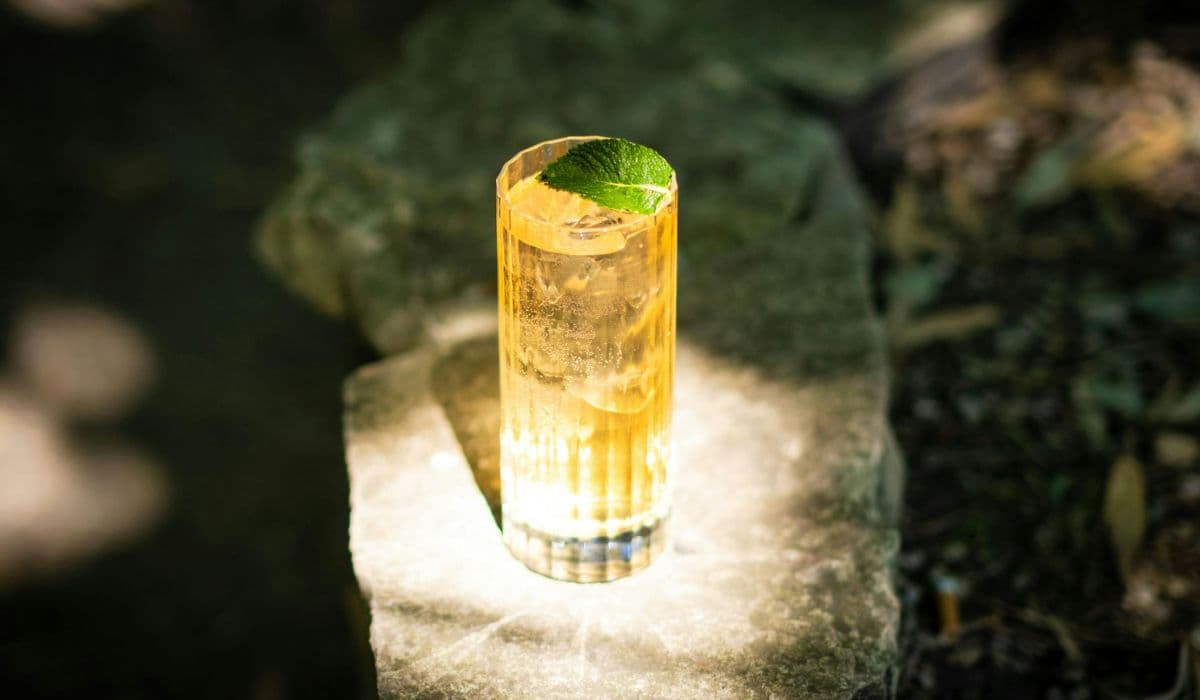
Highballs are a staple across global drinking cultures from Tokyo to Mumbai and London. Made by simply mixing whisky with club soda or sparkling water, this drink has its variations as well as loyalists. But how does club soda manage to change so much about whisky’s character? And what actually happens when bubbly soda meets a mature spirit? Does it merely "water down" the drink, or does carbonation fundamentally transform its flavor architecture and physiological delivery? For any whisky enthusiast perplexed by these questions, this unsobered guide will help. It goes on a science-backed exploration of how soda alters ethanol concentration, unleashes hidden aromatic esters, adjusts carbonic acid levels, and accelerates blood alcohol absorption.
The key to cracking a good highball is getting the dilution right. Neat whisky typically sits at 40 percent to 50 percent ABV (Alcohol By Volume). Adding a standard 1:3 ratio of whisky to soda, meaning 50ml whisky with 150ml soda, reduces the overall ABV of the glass. The ABV comes down to 10 percent to 12 percent, which is comparable to a light table wine.
.jpg&w=1920&q=75)
At very high concentrations, ethanol can irritate the pain receptors such as TRPV1 on the tongue and create a burning sensation. When you dilute the spirit below 20 percent ABV, you also remove the ethanol burn. This allows the subtle grain, oak, and fruit flavors to emerge without overwhelming the palate.
There is a distinct benefit to mixing your whisky with soda instead of water. Whisky contains hydrophobic, meaning water-repelling, aromatic compounds like guaiacol and vanillin. Guaiacol is what gives whisky its characteristic smoky and peaty flavor, and vanillin is where it gets its sweet oak and fruity esters from.
Ethanol traps these molecules, especially in spirits that are high-proof. Introducing water and carbon dioxide breaks the ethanol-water bonds. Rising carbon dioxide (CO2) bubbles act as micro-transporters. They physically lift volatile flavor esters out of the glass directly toward the olfactory senses as the bubbles pop on the liquid surface. This then forces volatile aromatic compounds out of the liquid and into the nose of the drinker.
Also Read: What Is The Difference Between Soda And Sparkling Water? Find Out Here
.jpg&w=1920&q=75)
Adding soda to the drink also significantly shifts the flavor of the whisky. When CO2 dissolves in water, it forms mild carbonic acid. The acid then lowers the pH of the drink to around 4 to 4.5. This mild acidity then introduces a crisp, refreshing, and bright mouthfeel that cuts through heavy malt sweetness and rich oak tannins.
Serving such a concoction chilled or on ice further lowers the liquid temperature and tightens the mouthfeel. It also mutes the harsh edges of the alcohol while amplifying refreshing citrus and herbal notes. That is mainly why highballs, for so long, have been served on ice.
A plethora of scientific studies have revealed that carbonated mixers impact the pyloric sphincter, which is the valve between the stomach and small intestine. It causes the sphincter to open faster due to stomach gas pressure. This forces the alcohol into the small intestine.
Now, the small intestine absorbs alcohol much faster than the stomach. Carbonated whisky drinks such as Whisky Soda enter the bloodstream more rapidly than neat whisky or whisky mixed with flat water. This eventually results in a quicker initial onset of effects despite the lower overall ABV per sip.
Also Read: From Heritage To Highball: The Evolution Of Rum In India
To sum it up, the main way that soda water changes whisky is by lowering its strength, releasing aromatic esters via effervescence, adding a crisp acidic bite, and accelerating alcohol absorption in the body. While whisky purists might deem adding soda to whisky as ruining it, that couldn’t be further from the truth. Mixing with soda is a scientifically validated way to explore a spirit's complex aroma profile in a long, refreshing format.